


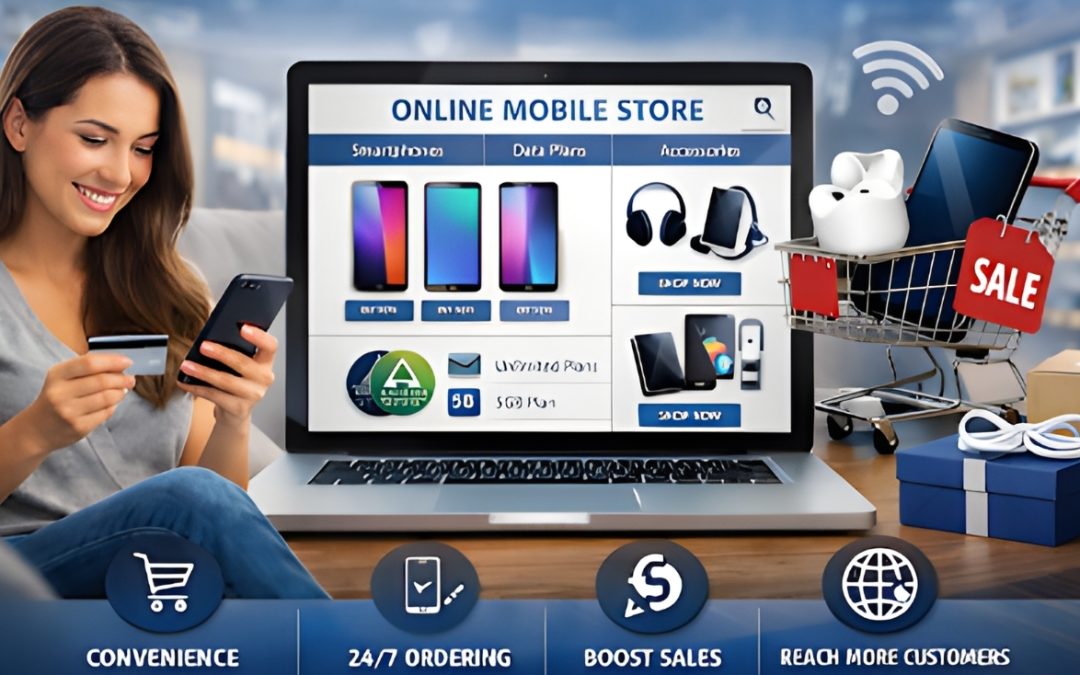
In today’s fast-paced digital landscape, the role of a mobile retailer has transcended the four walls of a physical storefront. While the “hands-on” experience of testing a new smartphone remains a powerful draw, the way consumers arrive at that purchase has fundamentally shifted. As of 2025, over 70% of smartphone users research products online before stepping into a store. For mobile retailers, investing in robust ecommerce solutions is no longer an “extra”; it is a core business necessity.
Here is an in-depth look at why a digital presence is critical for selling phones, data plans, and accessories in the modern market, and how you can leverage these tools to build lasting trust.
1. Capturing the “Research-First” Consumer
Modern shoppers are incredibly tech-savvy. Before committing to a high-ticket item like a flagship smartphone or a multi-year service contract, they want to compare specs, read reviews, and hunt for the best value. This “zero moment of truth” happens on search engines and social feeds long before a customer touches a device in your showroom. In 2025, the consumer journey is non-linear; a buyer might see an ad on social media, read a long-form review on a tech blog, and then visit your site to check local availability.
If your retail business doesn’t have a website, you are invisible during this crucial decision-making phase. Comprehensive e-commerce for telecom dealers allows you to:
- Showcase Your Expertise: Detail the technical nuances of the latest hardware, such as the difference between NPU-driven AI features or the low-light capabilities of new camera sensors.
- Centralize Complex Information: Provide clear, side-by-side comparisons of data plans. In-person conversations can sometimes feel overwhelming; a digital chart allows customers to digest data limits and roaming perks at their own pace.
- Build Authority through E-E-A-T: By offering high-quality content such as guides on device longevity or 5G coverage maps, you establish your brand as a trusted advisor. This aligns with Google’s standards, ensuring your store ranks higher when locals search for “best phone deals near me.”
2. The Power of “BOPIS” (Buy Online, Pick Up In-Store)
Convenience is the ultimate currency in 2025. Many customers want the certainty that a specific mode,l perhaps a limited-edition color, or a specific storage capacity is actually in stock before they make the trip. A website built with professional ecommerce design and development enables BOPIS, bridging the gap between digital ease and physical immediacy.
This hybrid model is highly effective for mobile retailers because:
- Reduced Friction: Customers can secure their device and plan from the comfort of their couch, avoiding the frustration of arriving at a store only to find the “Pro Max” model is sold out.
- Immediate Gratification: They still experience the excitement of “new phone day” by picking it up within the hour, rather than waiting three to five business days for shipping.
- Strategic Upsell Opportunities: When a customer enters the store to pick up their phone, your staff has a natural opening to recommend a screen protector, a protective case, or a high-speed charging brick. This “phygital” (physical + digital) approach turns a simple pickup into a relationship-building moment.
3. Maximizing Accessory Sales Through Personalization
Accessories like earbuds, smartwatches, and cases often carry higher profit margins than the phones themselves. By utilizing advanced mobile ecommerce solutions, you can use AI-driven recommendations to ensure no phone leaves the “virtual cart” without its compatible gear.
In a physical store, a busy salesperson might forget to mention a specific 30W adapter or the latest MagSafe-compatible wallet. On a website, a “Frequently Bought Together” section works 24/7. This ensures that every phone purchase is accompanied by the necessary accessories, increasing your Average Order Value (AOV) without adding to your payroll costs. Furthermore, personalized emails can follow up weeks later, suggesting a new case style or a wireless charging pad based on the exact model the customer purchased, keeping your brand top-of-mind for future tech needs.
4. Simplifying Complex Plan Configurations
Choosing a mobile plan is notoriously tedious. It involves calculating data needs, international roaming, and family sharing options. In a busy store environment, customers can feel pressured by a queue forming behind them, which often leads to “buyer’s remorse” or opting for the cheapest, least suitable plan because they didn’t want to take up too much time.
An online portal allows customers to interact with Plan Builders using interactive sliders to see how their monthly price changes with data limits or trade-in credits. This transparency builds significant Trustworthiness. Digital onboarding also allows for:
- Self-Paced Review: Customers can read the fine print regarding “unlimited” data caps and throttling without a salesperson hovering.
- Streamlined Logistics: Completing credit checks and contract signatures digitally reduces the “boring paperwork” time in-store, letting the physical visit be about the fun part: the new tech.
5. 24/7 Accessibility and Extended Reach
Your physical store has opening and closing hours, but your customers’ needs do not. A parent might realize at 11:00 PM that their child needs a replacement phone for school the next day. An online store ensures you never miss a sale due to the clock.
Furthermore, while your storefront serves a specific neighbourhood, your website can serve the entire region or country. This allows you to clear out older inventory like last year’s models or discontinued accessory lines, by reaching a much wider audience of bargain hunters online. It transforms your local shop into a national competitor, allowing you to scale your revenue far beyond your local foot traffic.
6. Elevating Trust Through Data Security
In the telecom industry, you aren’t just handling credit card numbers; you are managing sensitive personal data, including service contracts and identity verification.5 A professional ecommerce platform demonstrates Trustworthiness (the “T” in E-E-A-T) by utilizing secure, encrypted checkout processes and clear privacy policies.
When a customer sees that your site is secure and that you handle their data with care, that trust extends to your physical location. Modern consumers are wary of data breaches; showing that you invest in high-end digital infrastructure sends a clear message that you are a legitimate, professional entity that values their privacy as much as their purchase. This technical reliability is a cornerstone of authoritativeness in the digital age.
7. Building Long-Term Authority and Community Connection
Google rewards websites that demonstrate genuine experience and reliability. For a mobile retailer, this means more than just a “Buy Now” button. To truly dominate the 2025 market, your digital footprint must serve as a resource for the local community and beyond. This is achieved through:
- Verified User Reviews: Displaying honest feedback from customers who bought specific devices or switched to a certain carrier through your store. This provides “Social Proof” that influences new buyers.
- Hands-On Technical Guides: Writing “How-To” articles on transferring data from iOS to Android or optimizing battery life for specific models. This proves your Experience in the field.
- Transparent Pricing: Being upfront about activation fees and trade-in values. Hidden costs are the fastest way to kill trust; digital transparency is the fastest way to earn it.
When you provide this level of depth through high-quality ecommerce design, you aren’t just a shop; you are a destination. This digital footprint stays with the customer, making them more likely to return to your site when their two-year contract is up for renewal or when they need a gift for a family member.
The Bottom Line
In 2025, the “mobile” in mobile retailing refers to both the product and the customer’s behaviour. Shoppers are moving seamlessly between apps, search engines, and physical aisles. A retailer without tailored ecommerce for telecom dealers is like a phone without a SIM card, completely disconnected from the network that makes it functional.
By integrating dedicated mobile ecommerce solutions, you provide the transparency, convenience, and authority that modern consumers demand. You aren’t just selling hardware; you’re providing a seamless tech journey that starts with a click and ends with a satisfied, loyal customer. The investment in a digital storefront is an investment in the longevity of your brand in an increasingly connected world.